
Looking Back, Stepping Forward
A spiritual practice for the turning of the year

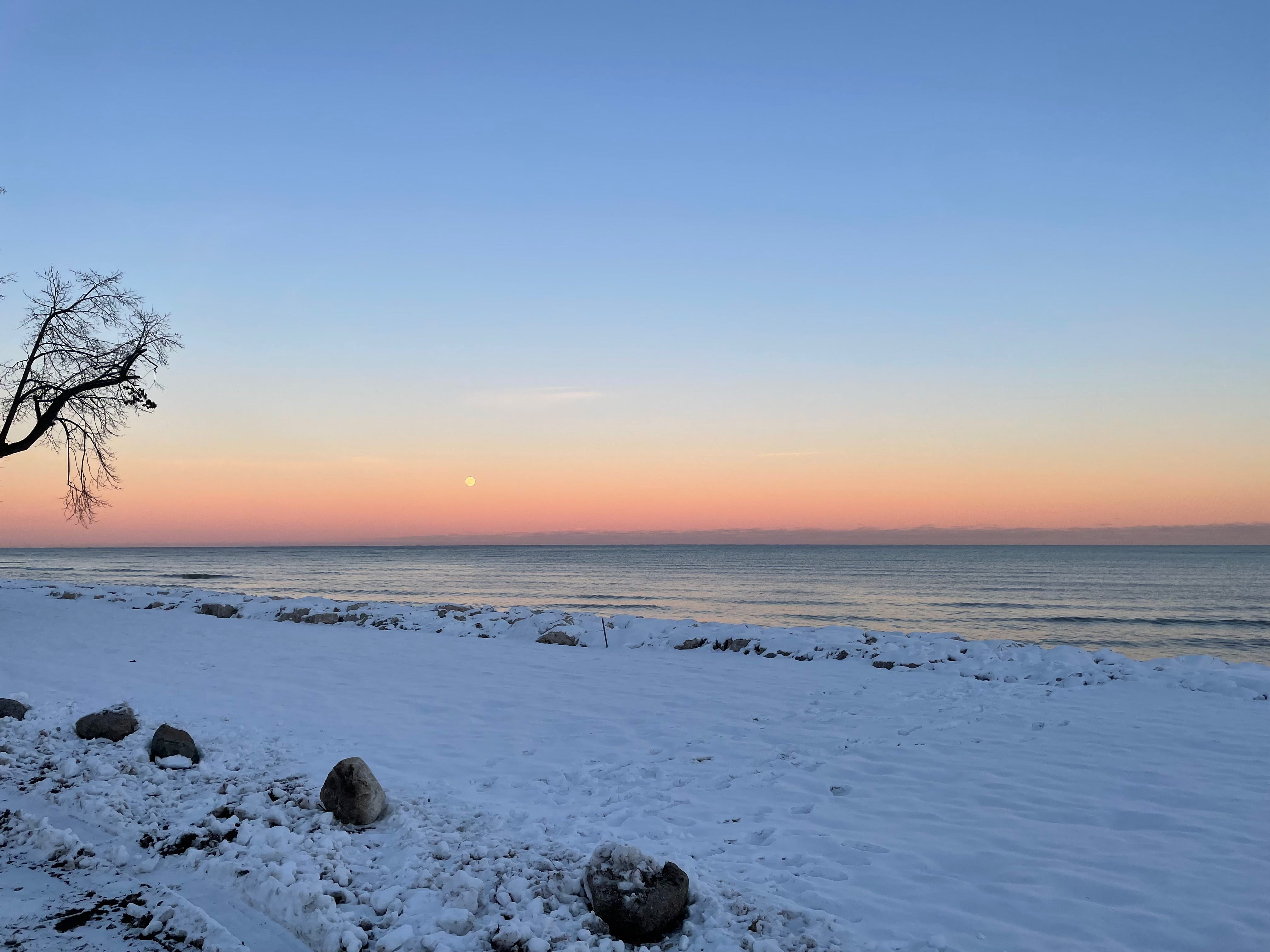
The end of the calendar year provides a good opportunity for us look back at the previous year and to look forward at the coming year.
Oftentimes, we may passively look back at the previous year, letting Google’s “Year in Search” or “YouTube Rewind” tell us what happened in the past year. But this inactive and impersonal approach to the cusp of the year doesn’t leave us with much personal ownership of what has happened or what is yet to come. On the other side, we may leap into the new year trying to set New Year’s resolutions that, according to most research, will not largely be upheld for more than a month.[1]
I would like to suggest something different here, something more. Since all our life is a gift from God, I’d like to propose we need something which enables us to meaningfully, personally, and actively direct our attention to God as we stand within the final moments of one year and embark upon a new year.
I’d like to share a spiritual practice that leads us in two directions: first, looking back at the previous year and, second, stepping forward into the coming year. And I’d like to root that in the psalms, the unique school of prayer in the Scripture and my own companion in personal prayer practices each day.
Looking Back: Give Thanks
There is so much we can do with the year that has gone by, but one of the best practices is to look back with thanksgiving to God for who He is and what He has done. Psalm 136 is an extended prayer of thanksgiving and serves as an example of thanksgiving for us. Here are the first few verses:
Give thanks to the Lord, for he is good.
His love endures forever.
Give thanks to the God of gods.
His love endures forever.
Give thanks to the Lord of lords:
His love endures forever. (Psalm 136:1-3)
Psalm 136 is a catalog of thanksgiving to God. There are so many ways we can think about our previous year, but I believe gratitude is one of the most powerful for us. It reshapes our outlook from negativity to positivity and, as recent research has shown, can enable us to cultivate relationships that make life worth living and lead us into flourishing as people.[2] As G. K. Chesterton once wrote, “When it comes to life the critical thing is whether you take things for granted or take them with gratitude.”[3]
One simple way I find helpful in looking back over my previous year with gratitude is to look over my calendar for the previous year, taking time to thank God for ways I saw God at work in my life. Some ways are simple, like the visit from a friend or a surprise guest who lifted my spirits. Others are more in-depth, such as big projects I was able to complete or key life transitions like a milestone birthday for me, a friend or family member’s life celebration, or a surgery that someone made it through successfully. As I look over that calendar, I simply offer thanks to God for each thing I notice.
Another approach that has helped me, and is even easier in the current technological era, is to look through my pictures from the past year. Visually, I can see the experiences, events, and relationships that become sources of gratitude. As with the calendar, as I look at those pictures, I offer thanks for what God has done and the gifts God has given me in this past year.
Sometimes, I have found it particularly helpful to write a list of thanksgiving to God. It can be as simple as pulling out a piece of paper, writing “Thank you, God:” at the top, and then writing a bulleted list of at least 10-20 things I am thankful for from the past year. You may find, like me, that the list becomes longer than you expected.
Looking Back: Lament
Sometimes, however, when we look back over the year, even while we offer thanks, we remember experiences, events, or relationships that we’d rather not have experienced. The options in this category are more than we’d like to name: a medical diagnosis, job loss, divorce, the death of a loved one, a financial hit, a relational rupture, an opportunity that disappeared. Perhaps some of us have even faced more than one of these in the past year.
When this happens, our gratitude becomes mingled with sorrow. It is important to remember that there is space for this in the life with God, something which is exemplified in the psalms of lament. Lament provides the space to express our sorrow and grief in the presence of God.
Psalm 13 is one example of lament, something evident even in the first few verses:
How long, Lord? Will you forget me forever?
How long will you hide your face from me?
How long must I wrestle with my thoughts
and day after day have sorrow in my heart?
How long will my enemy triumph over me?
Look on me and answer, Lord my God. (Psalm 13:1-3a)
Lament also offers a valuable way to look back at the past year. Sometimes we need to name the painful areas of our lives in the presence of God without papering over them with false positivity or wishful thinking. About lament, Martin Luther wrote these bracing words:
“What is the greatest thing in the Psalter but this earnest speaking amid the storm winds of every kind? . . . Where do you find deeper, more sorrowful, more pitiful words of sadness than in the psalms of lamentation? There again you look into the hearts of the saints, as into death, yes, as into hell itself…. And that they speak these words to God and with God, this I repeat, is the best thing of all. This gives the words double earnestness and life.”[4]
I want to give us permission to look back over our year with lament before God. We may need to name something in our life as a source of great sorrow or wounding, brining it to God from the depths of our souls. We could do this verbally or, as I often do, we may want to write out our personal psalm of lament. There is something powerful about laying it out in words and meeting with God in the honesty of prayerful lament.
Looking Back: Repent
However, it is not just painful things that have happened to us that we bring to God, but also the painful things we have done that we must bring to God. We do this so we can name them, confess them, and turn away from them. The biblical word for this is repentance.
Psalm 51 is perhaps the best-known extended prayer of repentance in the Bible. It references a time of deep crisis in the life of King David, when he committed adultery with Bathsheba, had her husband, Uriah, killed, and then tries to cover it all up. Nathan the prophet confronts David about these unseemly events in the life of God’s chosen king. Psalm 51 is David’s repentance response before God in relation to his failures.
Have mercy on me, O God,
according to your unfailing love;
according to your great compassion
blot out my transgressions.
Wash away all my iniquity
and cleanse me from my sin. (Psalm 51:1-2)
Here David names his wrongs openly and honestly, following that with a sincere request for forgiveness, cleansing, and restoration.
Create in me a pure heart, O God,
and renew a steadfast spirit within me. (51:10)
Hopefully, we all recognize in the past year there are some ways in which we have fallen short of God’s best for us in what we have done to others and ourselves. Let me suggest that it is better that we not carry these things into the next year with us as a burden. It is important and freeing to name them and lay them down in prayer with God, like burdens laid at the foot of the Cross.
Jesus taught His followers to pray, “Forgive us our sins, as we forgive those who sin against us” (Matthew 6:12). Although I believe confession is a good practice daily, I also believe the end of the year is a good time to draw near to God and name our sins—our wrongs—before God, to ask for forgiveness and cleansing, and to turn from them in our hearts.
Something I’ve done in the past is to write certain sins on a notecard or piece of paper, and then (safely) burn them as a sign of these sins being forgiven by God and cast away. We receive assurance in many places in Scripture that God is forgiving, most notably in 1 John 1:9, which tells us, “If we confess our sins, he is faithful and just and will forgive us our sins and purify us from all unrighteousness.”
Stepping Forward with Focus
Just as we look back at the previous year gone by with thanksgiving, lament, and repentance, it is important to step forward into the coming year in a personally engaged and meaningful way.
First, let me encourage us to step forward into the new year with focus. Psalm 63 is a beloved psalm reflecting both our need for God and the power of right focus upon God.
You, God, are my God,
earnestly I seek you;
I thirst for you,
my whole being longs for you,
in a dry and parched land
where there is no water. (Psalm 63:1)
The psalmist apparently faces a difficult time, an important moment, but it is clear that the psalmist is stepping forward into that moment with intentional focus on God.
We may have heard some say that the most important thing we can do is to put “first things first.” As we step into this year, there is nothing more important—nothing that should more truly be a first thing—than God Himself. Our focus must be on Him.
Jesus also emphasized this when He said:
“But seek first his kingdom and his righteousness, and all these things will be given to you as well.” (Matthew 6:33)
Entering into the new year, we must consider how to keep our focus on God. We need to consider what it looks like to prioritize relationship with God in the midst of all the relationships in our lives. We want to establish some specific ways to do this in the coming year that moves beyond mere resolution but becomes pervasive prioritization of the Living God in our life.
A good question we can ask ourselves is: what is one thing I will do to prioritize life with God this year?
Stepping Forward with Dedication
Related to this focus on God is a dedication of our lives from the inside out. Psalm 86 is a one of my favorite psalms, and verse 11 has become particularly important for me:
Teach me your way, Lord,
that I may rely on your faithfulness;
give me an undivided heart,
that I may fear your name. (Psalm 86:11)
That phrase about God giving us “an undivided heart” is a powerful picture of what it means to live with focus on God and dedication of life. It means that the center of our being—our heart, the place from which our life flows—is dedicated to God entirely. There is a unity—an integrity—to it.
Francois Fenelon describes it this way:
What God asks of us is a will which is no longer divided between him and any creature. It is a will pliant in his hands…which wants without reserve whatever he wants and which never wants under any pretext anything which he does not want.[5]
The New Testament describes this life given over to God with the word “discipleship.” Discipleship has God as its focus and gathers our desires around God in such a way that our everyday living is ordered by God through the power of the Holy Spirit. We live dedicated to God from the inside out, both in our desires and in our decisions.
Dallas Willard says:
The priorities and intentions – the heart or inner attitudes – of disciples are forever the same. In the heart of a disciple there is a desire, and there is decision or settled intent. The disciple of Christ desires above all else to be like him…[and there is] the decision to devote oneself to becoming like Christ.[6]
So we enter into this year not only with focus upon God, but also with our whole lives dedicated to God. We want an undivided heart—a life that has integrity in the fullest sense—both in the form of our desires and our decisions as disciples of Jesus.
So we can ask ourselves, “How will I order my life as a disciple of Christ this year? How will I bring my desires to God as part of my discipleship? How will I make decisions this year that reflection my discipleship to Christ? Is there any area of my life that is held back from Christ, such as time, finances, relationships, work?”
Jesus said this: “A good man brings good things out of the good stored up in his heart, and an evil man brings evil things out of the evil stored up in his heart. For the mouth speaks what the heart is full of” (Luke 6:45).
Moving Forward with Praise
The final word of the psalms, as seen in Psalm 150, is praise. Psalm 150 provides the capstone of the entire structure of the psalms. It is a psalm of high praise.
Praise the Lord.
Praise God in his sanctuary;
praise him in his mighty heavens.
Praise him for his acts of power;
praise him for his surpassing greatness...
Let everything that has breath praise the Lord.
Praise the Lord. (Psalm 150:1-2, 6)
As we head into the year, we remember that this is more than the passing of time, more than the setting of priorities or establishing of resolutions, and more than lament, confession, or thanksgiving. All of life, according to Scripture, is worship. We live in the daily presence of the Living God and this God is worthy of praise. The end of our days, according to the book of Revelation, will rise up in the heavenly scenes of worship in the presence of God.
Julian of Norwich says,
All of the strength that may come through prayer comes from the goodness of God, for he is the goodness of everything. For the highest form of prayer is to the goodness of God. It comes down to us to meet our humblest needs. It gives life to our souls and makes them live and grow in grace and virtues. It is near in nature and swift in grace, for it is the same grace which our souls seek and always will.[7]
The sum total of our life is a response of worship to God. As the calendar turns from December 31 to January 1 we continue to respond to the ultimate goodness of God with a life of worship.
And so, perhaps the end of the year can be more than just a celebration of an apple sliding down a pole in New York’s Times Square or a joyful party with friends and family, as wonderful as that can be. Might we remember there is something more: worship of the Eternal Creator who has made us for relationship with Himself.
So, what are your plans for the New Year? In the midst of all that is happening as we count down the days and hours into the new year, let me suggest setting aside some space and time in our lives to look back and step forward with God.
[1] Sarah Davis, “New Year’s Resolutions Statistics,” Forbes, Dec 18, 2023, https://www.forbes.com/health/mind/new-years-resolutions-statistics/.
[2] Jo-Ann Tsang and Ryan McAnnally-Linz, “Thanks A Lot: The Complicated Emotional World of Gratitude,” For the Life of the World podcast, November 11, 2023, https://faith.yale.edu/media/thanks-a-lot.
[3] Justin Taylor, “5 Quotes from G. K. Chesterton on Gratitude and Thanksgiving,” November 27, 2014, The Gospel Coalition, https://www.thegospelcoalition.org/blogs/justin-taylor/5-quotes-from-g-k-chesterton-on-gratitude-and-thanksgiving/.
[4] Martin Luther, Word and Sacrament, Luther’s Works, vol. 1, ed. E. T. Bachmann (Philadelphia: Fortress, 1960), 255 –56.
[5] Francois Fénelon, “A Will No Longer Divided,” in Devotional Classics, ed. Richard J. Foster and James Bryan Smith (New York: Harper Collins, 1993), 49.
[6] Dallas Willard, “The Cost of Nondiscipleship,” Devotional Classics, 15.
[7] Julian of Norwich, “The Highest Form of Prayer,” in Devotional Classics, 77.
Much to chew on here! Thanks Matt for this meaningful reflection which also pairs well with your sermon from yesterday.
Wow!